Insights
Shopifyinsights
Field notes from the team building Shopify Plus stores, Hydrogen storefronts and custom apps — migrations, architecture decisions and what actually moves conversion. Written by the people who ship the work.
- Articles
- 57
- Categories
- 11
- Average read
- 3 min
All articles57
Showing 57 articles
 Latest
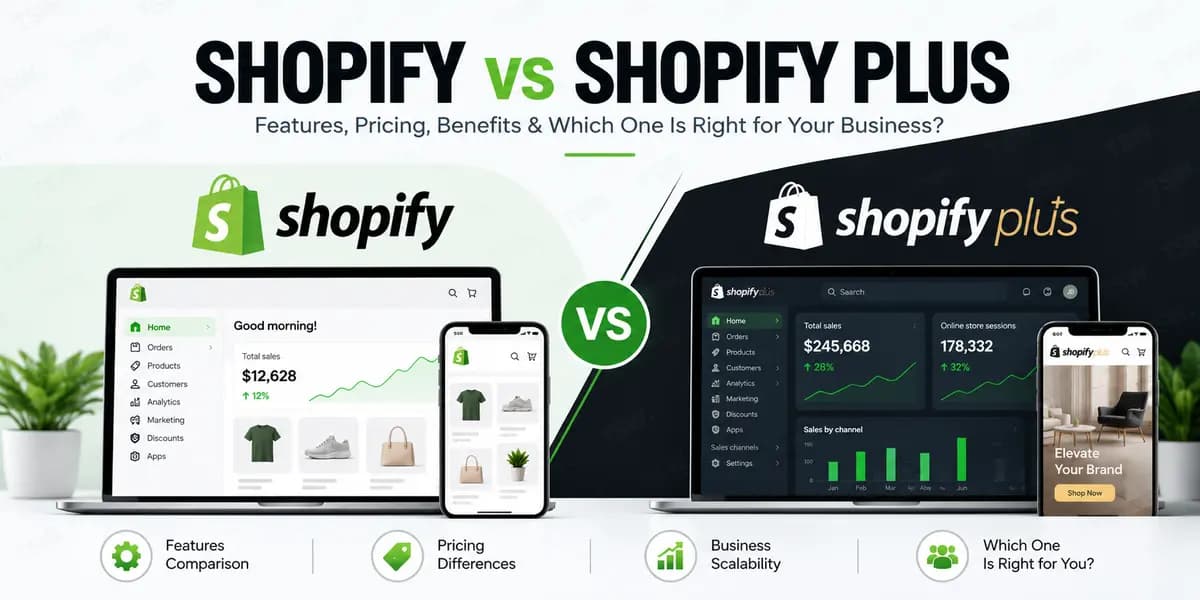
Shopify vs Shopify Plus: Differences, Costs and When to Upgrade
Shopify Plus costs far more than Shopify's standard plans — so what do you actually get for it? A plain comparison of features, checkout, B2B, automation and costs, and a simple way to decide whether your store is ready to upgrade.
 Jay Patel
BigCommerce vs Shopify (2026): Which Platform Should You Choose?
BigCommerce and Shopify are both hosted ecommerce platforms with similar prices, but they make different trade-offs on fees, built-in features, apps, B2B and design. This comparison helps you choose — or decide whether to move.
Jay PatelShopify Black Friday Checklist 2026: Prepare Your Store for BFCM
Black Friday falls on 27 November 2026 and Cyber Monday on 30 November. This checklist covers what to prepare and when — store speed, apps, offers, email and SMS, ads, stock, support and the checks to run on the day.
Jay PatelShopify Store Audit Checklist: 40 Checks to Find Lost Sales
A Shopify store audit shows where you are losing visitors, sales and rankings. Work through these 40 checks across speed, SEO, product pages, checkout, apps, tracking and accessibility — and fix the biggest problems first.
Jay PatelShopify Payment Gateways in India: Options, Fees and Setup
Shopify Payments isn't available in India, so Indian stores take payments through third-party gateways such as Razorpay, PayU, Cashfree and CCAvenue. This guide explains your options, the fees involved and how to set them up — including cash on delivery.
Jay PatelHow to Set Up Google Analytics 4 on Shopify
Shopify connects to Google Analytics 4 through Google's sales channel app, which sends page views, product views, add-to-carts, checkouts and purchases automatically. This guide covers setup, consent, testing and the mistakes that double-count your sales.
Jay PatelHow Much Does Google Ads Cost? Budgets, Clicks and Fees Explained
Google Ads has no minimum spend: you set a budget and pay when people click. What you actually pay depends on your industry, competition and how well your campaigns are run. Here's how pricing works, how to set a budget and what management costs.
Jay PatelSMS Marketing for Shopify: A Practical Guide
SMS is the most direct channel you have: messages are read within minutes. Used well — with consent, at the right moments and alongside email — it drives repeat sales. Here's how to set up SMS marketing for a Shopify store and stay compliant.
Jay PatelNext.js vs WordPress: Which Is Better for Your Website?
WordPress powers a huge share of the web and is easy for editors; Next.js builds faster, more flexible sites and apps. This comparison covers speed, SEO, editing, security, cost and scalability — and the hybrid option of headless WordPress.
Jay PatelReact vs Next.js: The Differences and Which to Choose
React is a library for building user interfaces; Next.js is a framework built on React that adds routing, server rendering and SEO features. Here's what each one does, how they differ and when to use plain React, Next.js or another React framework.
Jay PatelBest Headless CMS in 2026: Payload, Sanity, Strapi, Contentful and More
A headless CMS manages your content and delivers it to any front end. We compare the leading options — Payload, Sanity, Strapi, Contentful, Storyblok and headless WordPress — on editing, hosting, pricing model and fit, so you can choose with confidence.
Jay PatelHow Much Does a Website Cost in 2026? A Complete Breakdown
A website can cost very little to launch yourself or be a significant investment as a custom build. This breakdown explains every cost — domain, hosting, design, development, content and maintenance — and what really drives the price of a professional website.
Jay PatelWebsite Maintenance Cost: What You Pay For and Why It Matters
Every website needs care after launch: updates, security, backups, monitoring and small changes. This guide explains what website maintenance includes, what drives its cost on WordPress, Shopify and custom sites, and how to choose a plan.
Jay PatelManaged vs Shared Hosting: Which Does Your Website Need?
Shared hosting is cheap because many sites share one server; managed hosting costs more because someone tunes, secures and looks after the environment for you. Here's how they differ in speed, security, support and cost — and when to move up.
Jay PatelHow Much Does It Cost to Build an App in 2026?
App development costs range widely, from a simple first version to a complex platform. This guide breaks down what drives the price — features, platforms, design, back end, integrations — plus the ongoing costs most budgets forget.
Jay PatelFlutter vs React Native (2026): Which Should You Choose?
Flutter and React Native both build iOS and Android apps from one codebase, with near-native performance. They differ in language, rendering, ecosystem and team fit. This comparison explains the trade-offs and when to choose each.
Jay PatelPWA vs Native App: Which Does Your Business Need?
A progressive web app (PWA) installs from the browser and works offline; a native app comes from the App Store or Google Play with full device access. Here's how they compare on cost, features, reach and discoverability — and when each makes sense.
Jay PatelHow to Publish an App on Google Play and the App Store
Publishing an app means more than uploading a build. This step-by-step guide covers developer accounts, store listings, privacy declarations, testing requirements, review and release on both Google Play and Apple's App Store.
Jay PatelCustom CRM vs Off-the-Shelf CRM: Which Is Right for You?
Off-the-shelf CRMs like HubSpot, Zoho and Salesforce are quick to start; a custom CRM fits your sales process exactly and avoids per-user fees. Here's how to compare cost, fit, integrations and ownership — and the middle path of customising an existing CRM.
Jay PatelHow to Build an LMS: Features, Steps and Choices
Whether you sell courses or train staff, a learning management system has to handle content, learners, assessments and reporting. This guide covers the features to plan, the build-versus-buy decision and the steps to launch a custom LMS.
Jay PatelHow to Build a SaaS MVP: A Step-by-Step Guide
A SaaS MVP is the smallest version of your product that real customers will use and pay for. This guide walks through validating the problem, choosing the core features, the technical foundations that matter from day one and launching to learn.
Jay PatelERP for Ecommerce: When You Need One and How to Integrate It
As an online store grows, stock, orders, purchasing and accounts outgrow spreadsheets and apps. This guide explains what an ERP does for ecommerce, the signs you need one, your options from Zoho and Odoo to NetSuite, and how to integrate it with Shopify or WooCommerce.
Jay PatelUI vs UX Design: What's the Difference?
UX design shapes how a product works; UI design shapes how it looks and feels. This guide explains the difference with clear examples, what each designer delivers, how they work together and why both matter for conversion.
Jay PatelWebsite Redesign Checklist: Redesign Without Losing SEO
A redesign should lift conversions and rankings, not reset them. This checklist covers planning, content, design, SEO protection, testing and launch — including the redirect and tracking steps that most often go wrong.
Jay PatelShopify Theme Development: A Guide to Online Store 2.0 Themes
Online Store 2.0 changed how Shopify themes are built: sections on every page, app blocks and metafields in the theme editor. Here is how a modern Shopify theme is planned, built and maintained — and when a custom theme is worth it.
Jay PatelShopify Metafields and Metaobjects Explained (With Examples)
Metafields and metaobjects let you store the extra information your products and pages need — specifications, size guides, ingredients, FAQs — and show it in your theme without code changes. Here is how they work and how to plan them.
Jay PatelSelling Internationally with Shopify Markets: A Practical Guide
Shopify Markets lets one store sell to many countries with local currencies, languages, domains and pricing. This guide covers how to set up international selling on Shopify — and the SEO, pricing and logistics decisions that matter most.
Jay PatelShopify B2B in 2026: Wholesale on Every Plan, and When You Need Plus
Since April 2026, Shopify's native B2B features are available on every plan, not just Shopify Plus. Here is what Shopify B2B does, what changed, where Plus still matters and how to run wholesale and retail from one store.
Jay PatelShopify Store Launch Checklist: 30 Things to Check Before You Go Live
Launching a Shopify store is mostly about details: payments, taxes, emails, SEO, speed and tracking. This 30-point launch checklist covers what to check before you remove the password — and what to watch in the first week.
Jay PatelHow to Hire a Shopify Developer or Agency: Questions to Ask First
Choosing a Shopify developer or agency decides your launch date, budget and how easy the store is to grow. Here is how to compare freelancers and agencies, the questions to ask and the red flags to avoid.
Jay PatelShopify App vs Custom Development: When to Build Your Own
The Shopify App Store covers most needs, but monthly fees, overlapping apps and missing features add up. Here is how to decide between a public app, a custom app, Shopify Functions or a theme change — and what each costs to run.
Jay PatelShopify Subscriptions: How to Add Subscribe and Save to Your Store
Subscriptions turn one-off buyers into predictable recurring revenue. Here is how subscriptions work on Shopify, how to choose between Shopify's own app and specialist apps, and how to design offers customers actually keep.
Jay PatelWhat Is Headless Commerce? Benefits, Drawbacks and When It Makes Sense
Headless commerce separates your storefront from the commerce engine behind it. It promises speed and design freedom, but costs more to build and run. Here is a clear explanation of headless commerce on Shopify — and how to tell whether you need it.
Jay PatelHydrogen vs Next.js for Headless Shopify: Which Should You Choose?
Hydrogen is Shopify's own framework for headless storefronts; Next.js is the most popular React framework on the web. Both build excellent headless Shopify stores. Here is how they compare on features, hosting, flexibility and long-term cost.
Jay PatelMagento to Shopify Migration: A Step-by-Step Guide for 2026
Moving from Magento (Adobe Commerce) to Shopify cuts hosting, patching and development overheads, but the migration needs careful data mapping and redirects. This guide covers what moves, what changes and how to protect your SEO.
Jay PatelDoes Your Shopify Store Need a Mobile App? Options and Costs
A mobile app can lift repeat purchases with push notifications and faster reordering — but only if customers buy often enough to install it. Here are your options, from the Shop app to app builders and fully custom apps, and how to decide.
Jay PatelShopify Store Maintenance: A Monthly and Quarterly Checklist
Shopify handles servers and security, but your store still needs regular care: apps, theme updates, speed, broken links, data backups and checkout tests. Here is a practical maintenance checklist to keep a Shopify store fast and selling.
Jay PatelEcommerce Conversion Rate Optimisation: 15 Proven Shopify CRO Tactics
More traffic is expensive; converting the traffic you already have is not. These 15 conversion rate optimisation tactics for Shopify stores cover speed, trust, product pages, navigation, cart and checkout — and how to test them properly.
Jay PatelHow to Optimise a Shopify Product Page for Sales and SEO
The product page is where shoppers decide. This guide covers every element of a high-converting Shopify product page — images, copy, price, variants, reviews, delivery information and SEO — with a checklist you can work through today.
Jay Patel8 Klaviyo Email Flows Every Shopify Store Needs
Automated email flows earn revenue every day without new campaigns. These eight Klaviyo flows — from welcome series to win-back — are the foundation of email marketing for Shopify stores, with what to put in each one.
Jay PatelGoogle Shopping Ads for Shopify: Setup and Optimisation Guide
Google Shopping puts your products, prices and images directly in search results. This guide covers connecting Shopify to Google Merchant Center, free listings, Performance Max and Standard Shopping campaigns, and how to optimise your product feed.
Jay PatelMeta Ads for Shopify Stores: A Practical Facebook and Instagram Playbook
Facebook and Instagram ads can find new customers at scale — if tracking, creative and offers are right. This playbook covers connecting Shopify to Meta, catalogue ads, Advantage+ campaigns, creative testing and how to judge results.
Jay PatelAI Search Optimisation: How to Get Your Store Cited by ChatGPT and Google AI
Shoppers increasingly ask AI assistants for recommendations. AI search optimisation — sometimes called GEO — makes your store easy for Google AI Overviews, ChatGPT and Perplexity to understand and cite. Here is what works and what is hype.
Jay PatelShopify Accessibility: A WCAG Checklist for Online Stores
An accessible store is easier for everyone to use — and in the EU it is now a legal requirement for many online shops. This checklist covers the WCAG essentials for Shopify themes, from contrast and keyboard access to forms and product images.
Jay PatelEcommerce UX Design: 12 Principles for Stores That Sell
Good ecommerce UX makes buying feel effortless. These 12 principles — from navigation and search to product pages, mobile design and checkout — are the foundations we use when designing Shopify stores.
Jay PatelCustom WordPress Website or Theme? How to Choose for Your Business
WordPress powers everything from simple brochure sites to large corporate websites. This guide compares off-the-shelf themes, page builders and custom WordPress development — on speed, flexibility, security and long-term cost.
Jay PatelAI Receptionists: How AI Voice Agents Answer Calls and Book Appointments
An AI receptionist answers every call, day or night, answers common questions and books appointments straight into your calendar. Here is how AI voice agents work, where they fit, what to look for and their limits.
Jay Patel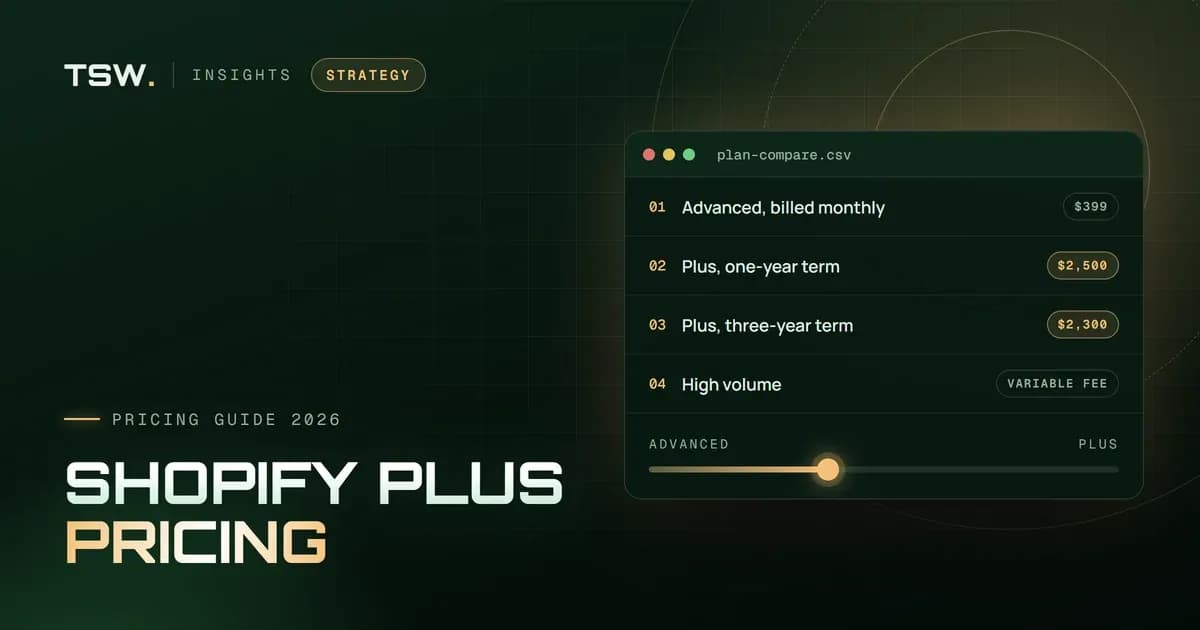
Shopify Plus Pricing in 2026: What It Really Costs and When to Upgrade
Shopify Plus starts at $2,300 a month on a three-year term. Here is what that buys, how the variable platform fee works, the costs around it and a simple way to tell whether upgrading from Advanced will pay for itself.
Jay Patel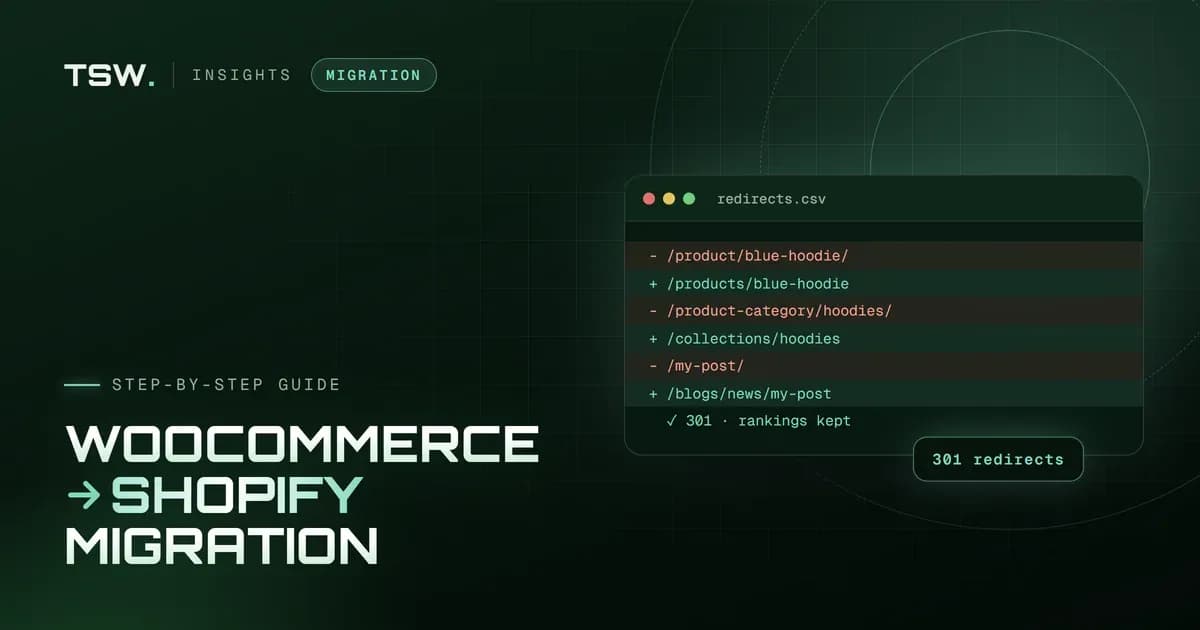
WooCommerce to Shopify Migration: A Step-by-Step Guide That Protects Your SEO
Moving from WooCommerce to Shopify is straightforward for data and easy to get wrong for search. This guide covers planning, data mapping, URL redirects, customer accounts, testing and launch — so your rankings and revenue come with you.
Jay Patel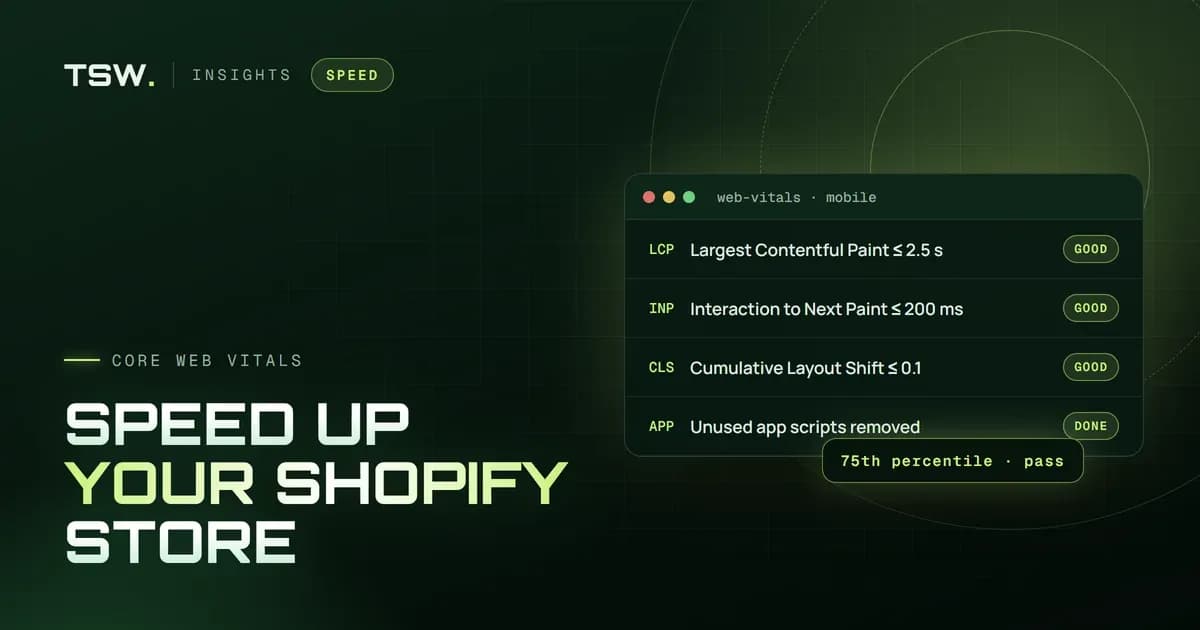
How to Speed Up Your Shopify Store: A Practical Core Web Vitals Guide
A slow Shopify store costs sales and rankings. This practical guide shows how to measure speed properly, then fix what usually slows Shopify down — apps, images, fonts, scripts and theme code — so you pass Core Web Vitals.
Jay Patel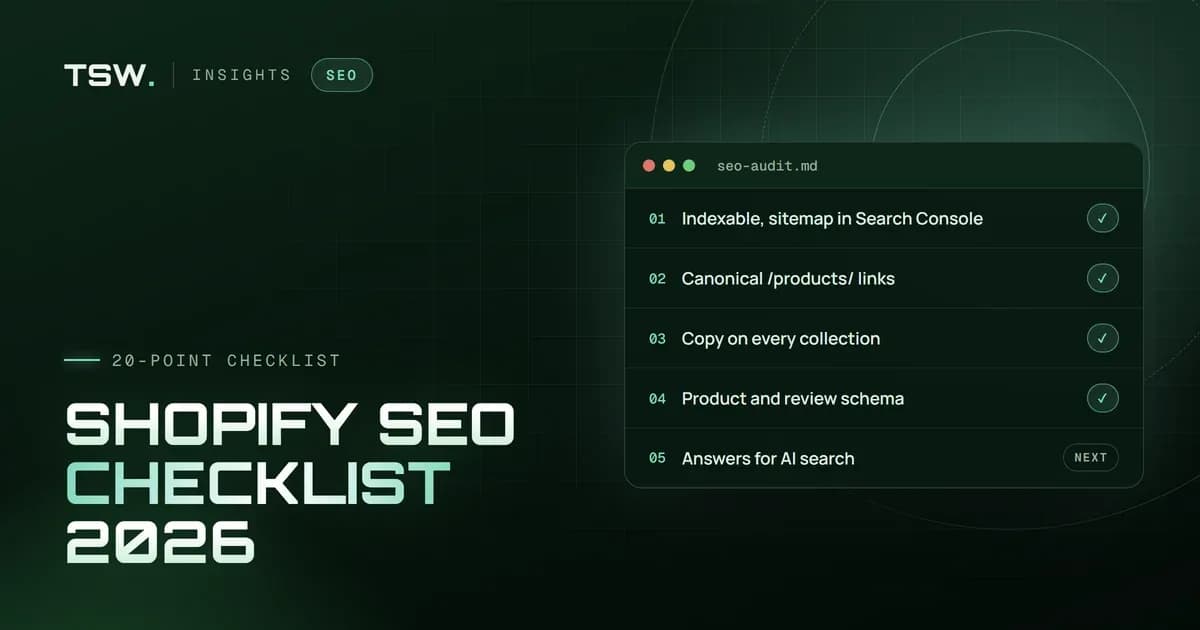
Shopify SEO Checklist 2026: 20 Fixes for Higher Rankings
Shopify gets the basics of SEO right, but most stores still leave rankings on the table. This checklist covers the 20 fixes we run on every Shopify SEO audit — technical, on-page, structured data, content and AI search.
Jay Patel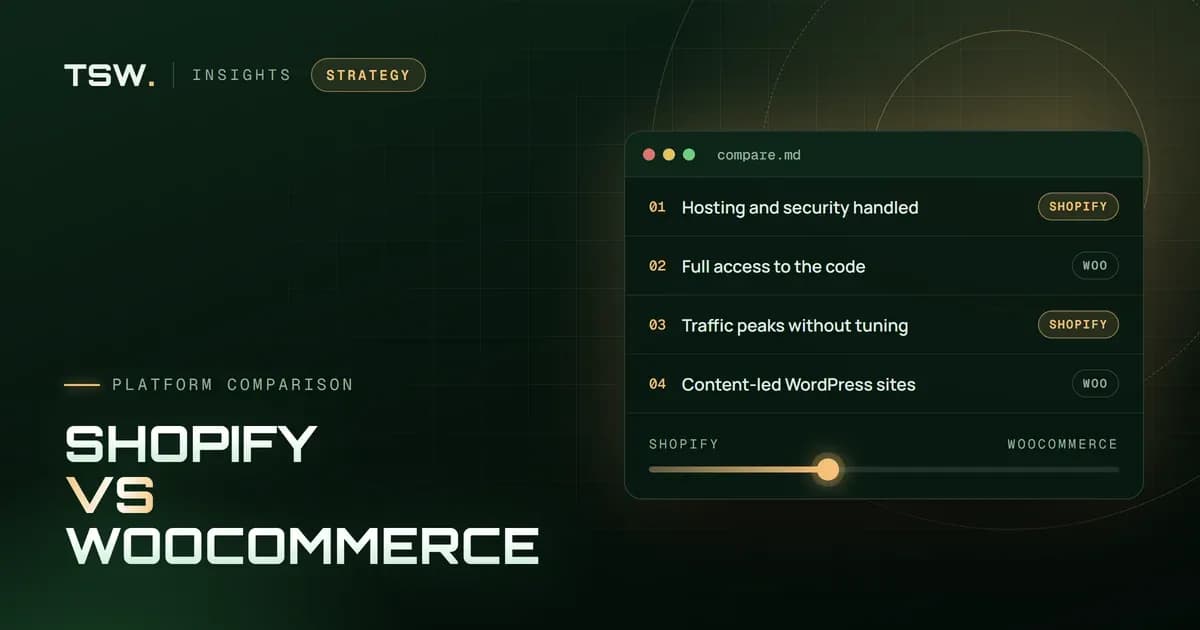
Shopify vs WooCommerce in 2026: An Honest Comparison for Growing Brands
Shopify and WooCommerce can both run a successful online store. The right choice depends on your budget, your team and how much you want to manage yourself. We build on both — here is our honest comparison for 2026.
Jay Patel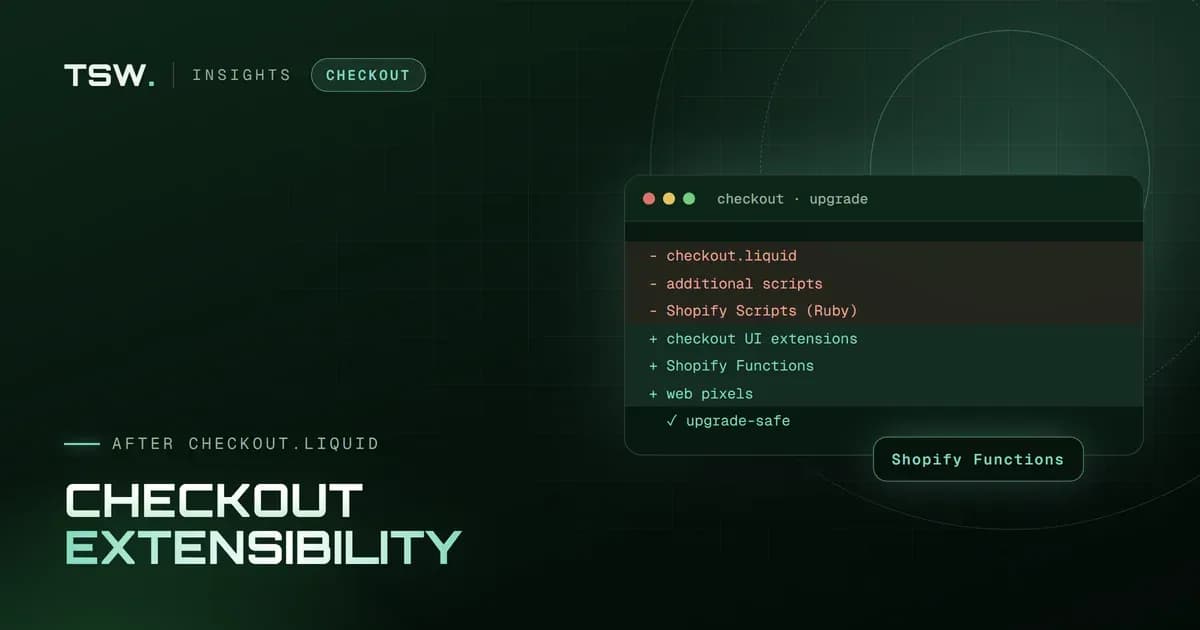
Shopify Checkout Extensibility: A Guide for After checkout.liquid and Scripts
checkout.liquid, additional scripts and Shopify Scripts have all reached end of life. This guide explains Shopify Checkout Extensibility — UI extensions, Shopify Functions, web pixels and branding — and how to rebuild what your checkout lost.
Jay Patel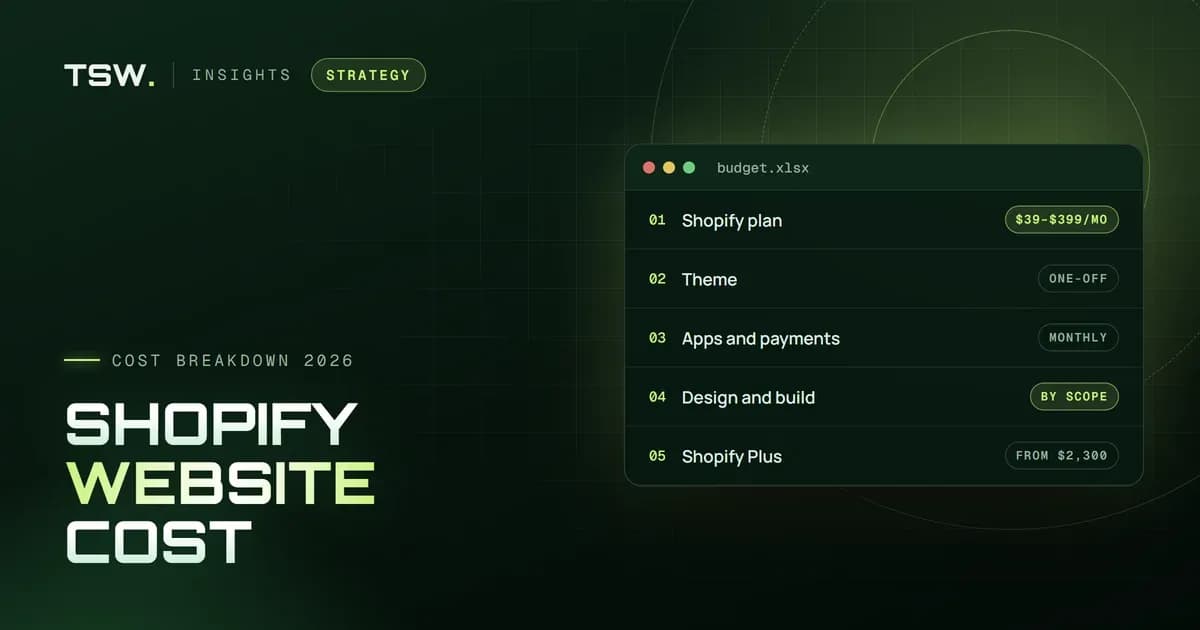
How Much Does a Shopify Website Cost in 2026? A Complete Breakdown
A Shopify website can cost a few hundred dollars to launch yourself or be a significant investment as a custom build. This breakdown explains every cost — plan, theme, apps, payments, design and development — and what drives an agency quote.
Jay Patel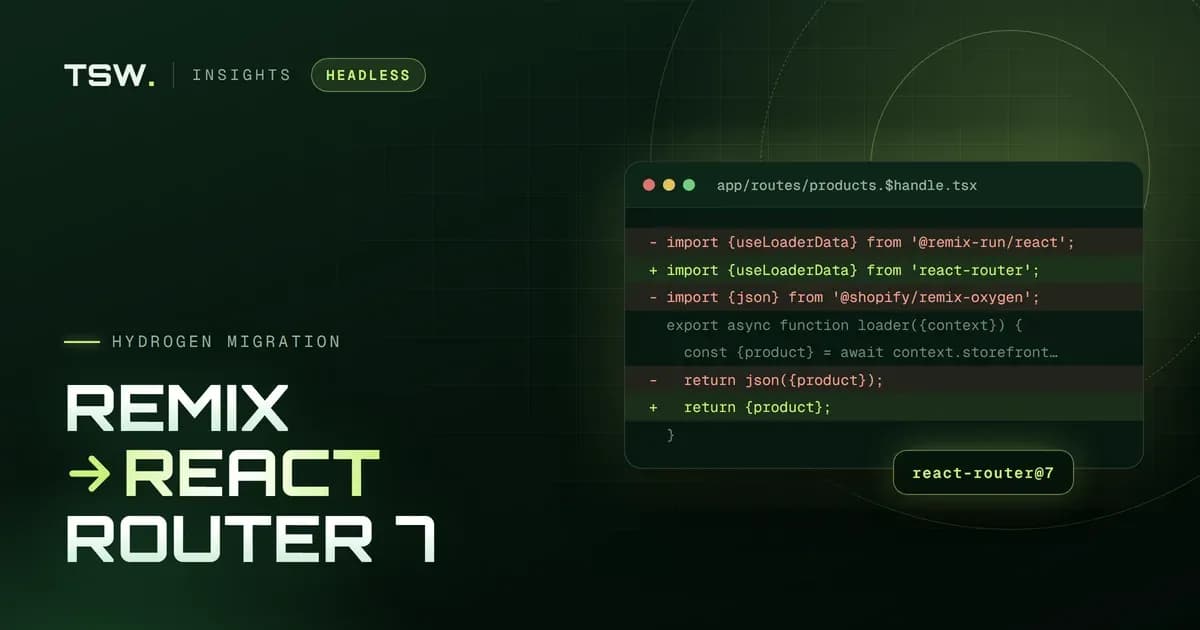
Hydrogen on React Router 7: what actually changed
The migration off Remix v2 touched routing, data loading and the Oxygen runtime. Here is what breaks, what does not, and what it means for a store already running Hydrogen.
Jay Patel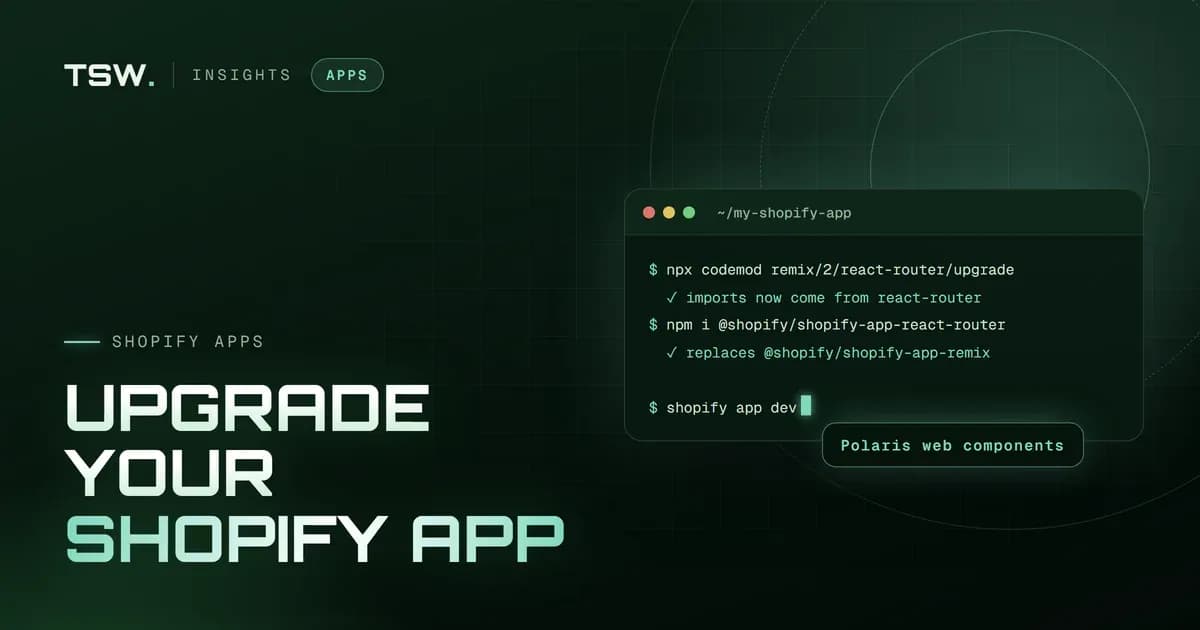
Migrating a Remix Shopify app before it becomes legacy
Shopify now recommends React Router for apps. The codemod handles most of it — the work is in Polaris Web Components and the APIs that quietly went away.
Jay Patel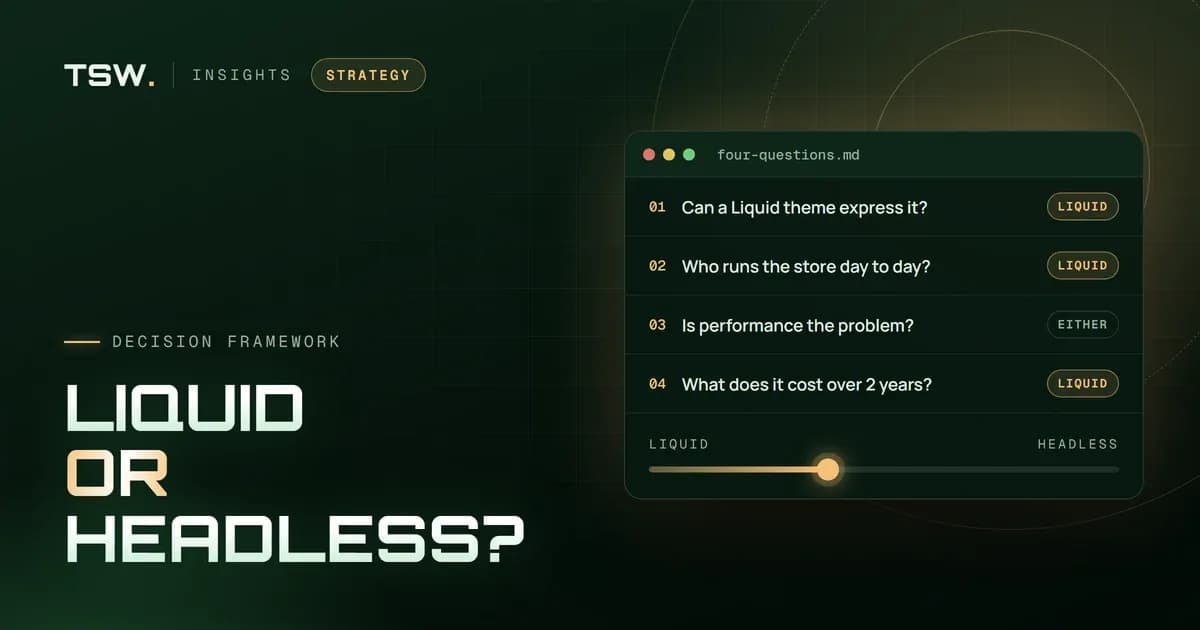
Liquid or headless: a decision framework, not a preference
Four questions that settle it in an afternoon, and the three situations where going headless will cost more than it returns for at least two years.
Jay Patel
Browse by topic
Start a project
Let's build yours Let's build yours
Tell us where you are — a new build, a migration or a project that has stopped moving. You get a fixed scope and a plan in writing, not a sales call.
- Fixed quote in 48 hoursScope, milestones and price in writing before anything starts.
- No obligationThe plan is yours to keep, even if you build it somewhere else.
- Straight to the teamYou talk to the people who design and build it, not an account manager.