Key takeaways
- Headless means the storefront is a separate application that talks to Shopify through APIs.
- It gives complete freedom over design, content and performance, and lets one backend serve many channels.
- It also means more development, hosting and maintenance than a Liquid theme.
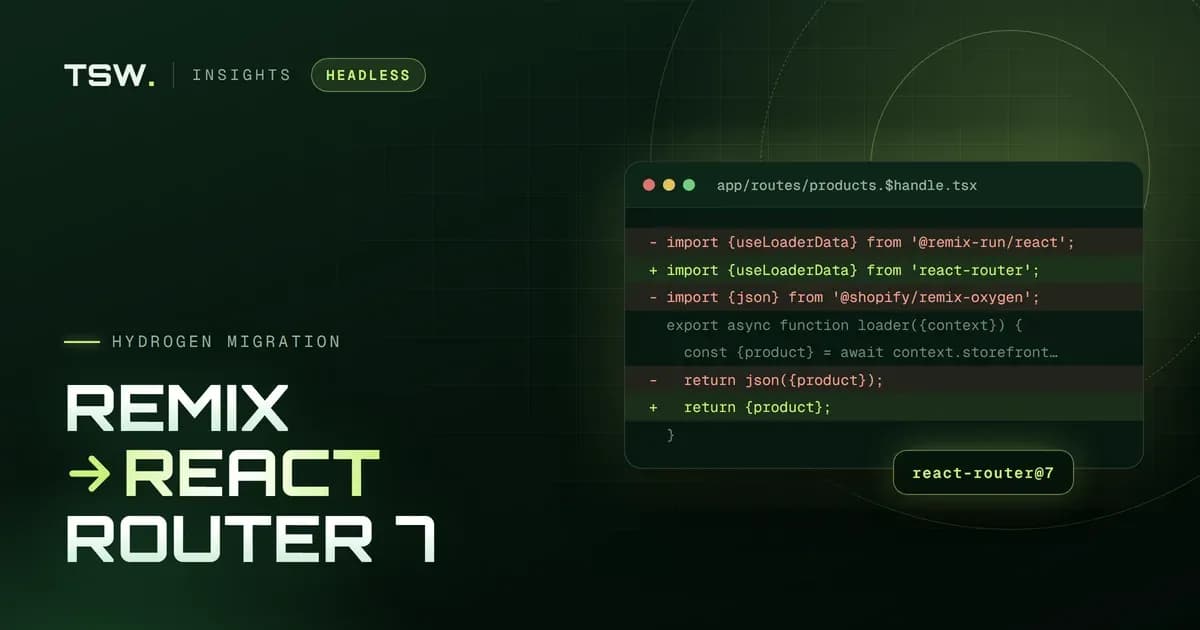
- On Shopify, headless storefronts are usually built with Hydrogen or another React framework such as Next.js.
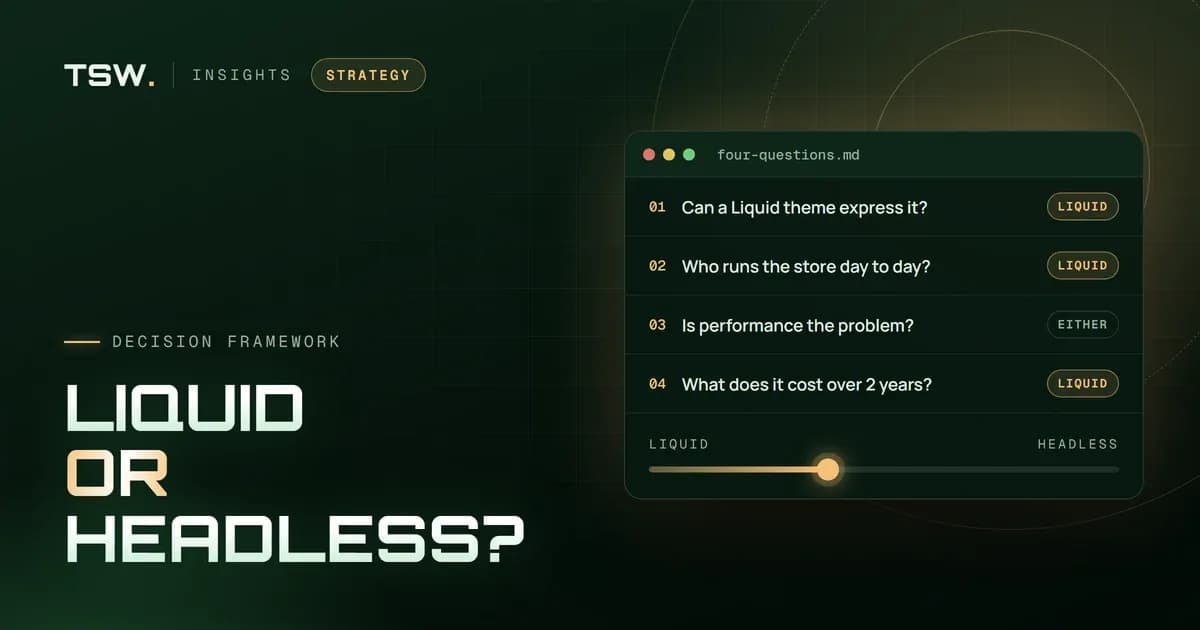
- Most stores should start with a fast Liquid theme; headless suits brands that have outgrown one.
In a traditional Shopify store, the theme and the commerce engine are one system: Shopify renders your Liquid theme. In headless commerce, the storefront — everything customers see — is a separate application. It fetches products, collections and carts from Shopify's Storefront API and hands customers to Shopify's checkout to pay.
How headless commerce works
- The backend: Shopify still manages products, inventory, orders, customers and checkout.
- The frontend: A custom web application — often built with React — renders every page and calls Shopify's APIs.
- Content: A headless CMS or Shopify's own metaobjects supply editorial content.
- Hosting: The frontend runs on its own hosting, such as Shopify's Oxygen or a platform like Vercel.
The benefits
- Design freedom: No theme constraints: any layout, animation or interaction is possible.
- Content-rich experiences: Editorial, storytelling and commerce blend on the same pages, managed from a CMS.
- Performance control: Teams control exactly what loads on each page.
- Omnichannel: The same backend can serve websites, apps, kiosks and other channels.
The drawbacks
- Higher cost: A custom frontend takes longer to build than a theme and needs developers to maintain it.
- Less self-service: Features the theme editor gives you for free — sections, app blocks — must be rebuilt or replaced by a CMS.
- App compatibility: Many Shopify apps assume a Liquid theme and need custom integration.
- More moving parts: Separate hosting, deployments and monitoring.
When headless makes sense
- Your brand experience can't be achieved with a well-built theme.
- You run content-heavy storytelling, many markets or several frontends from one catalogue.
- You have the budget and developers — in-house or an agency — to maintain a custom application.
If performance is your main reason, start with a speed audit of your current theme: a well-built Liquid theme is very fast. Our Liquid or headless framework walks through the decision, and Hydrogen vs Next.js compares the two main frameworks. We build both — see headless Shopify with Hydrogen or ask us.
Filed under
 Jay Patel