Hydrogen on React Router 7: what actually changed
The migration off Remix v2 touched routing, data loading and the Oxygen runtime. Here is what breaks, what does not, and what it means for a store already running Hydrogen.
React.js development
Interactive front ends, single-page apps and component libraries in React and TypeScript — fast, accessible and easy for your team to build on.
Quick answer
React.js development is building user interfaces with React, the JavaScript library for interactive web front ends. Interfaces are made of reusable components, which keeps large apps consistent and easy to extend. React powers dashboards, SaaS products, customer portals and storefronts, and pairs with frameworks such as Next.js or React Router when pages also need server rendering.
What we build
Front ends that stay fast and maintainable as the product and the team grow.
Get a fixed quoteSingle-page and full-stack apps with clean state management, routing and data fetching.
Data-rich dashboards with charts, tables, filters and real-time updates that stay responsive.
Reusable, documented components in Storybook that keep every screen consistent.
Server-rendered React for products that need SEO and fast first loads as well as interactivity.
Move from jQuery, AngularJS or class-based React to modern React and TypeScript, step by step.
Bundle splitting, rendering fixes and caching that make slow React apps feel instant.
React front ends connected to REST and GraphQL APIs, authentication providers and third-party services.
Experienced React developers joining your team to build features on your roadmap.
Ways to work
Fixed-price projects or a dedicated team — both with a clear plan and weekly demos.
Start lean
A first version of your product, focused on the features users need now.
Most chosen
A complete application designed and built end to end, with tests and documentation.
Ongoing
React developers working on your roadmap, sprint by sprint.
In every build
How it works
Product-minded developers, short sprints and a working build to click every week.
Free 30-minute call
Users, features, data and the existing code base, reviewed with your team.
Within 48 hours
Architecture, scope, milestones and price — or a team plan — in writing.
Weekly demo builds
Features designed, built and tested in short sprints with preview links.
30 days of fixes
Production release, documentation and support while your users settle in.
Straight answers
The things brands actually ask us before a build — answered properly, including the times the answer is that you do not need us.
React is used to build interactive user interfaces: web apps, dashboards, customer portals, SaaS products and ecommerce front ends. Its component model makes large interfaces consistent and easier to maintain.
Next.js is a framework built on React. If your pages need to rank in search or load fast for first-time visitors, Next.js (or React Router with server rendering) is usually the better base. For an app behind a login, plain React can be enough. We recommend the right setup for each project.
It depends on the number of screens, the complexity of the data and the integrations. After a short call we send a fixed, itemised quote — or a monthly price for a dedicated team.
Yes. We start with a code review, fix the most important issues and then continue building — or modernise the code base step by step if it needs it.
Yes. Our developers can join your team, work in your tools and follow your processes, with a monthly plan you can scale up or down.
Yes. We build cross-platform mobile apps with React Native and Flutter, and can share logic between your web and mobile apps where it makes sense.
Still weighing it up?Tell us the situation
Guides
Practical answers to the questions we hear most, from the team that builds these stores.
All insights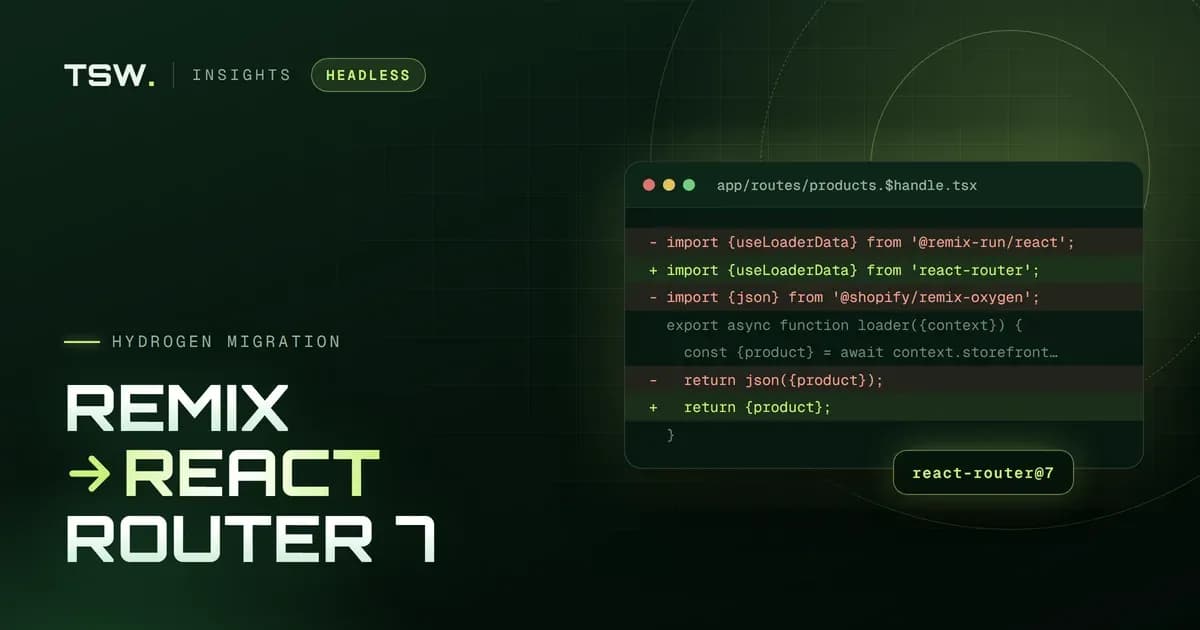
The migration off Remix v2 touched routing, data loading and the Oxygen runtime. Here is what breaks, what does not, and what it means for a store already running Hydrogen.
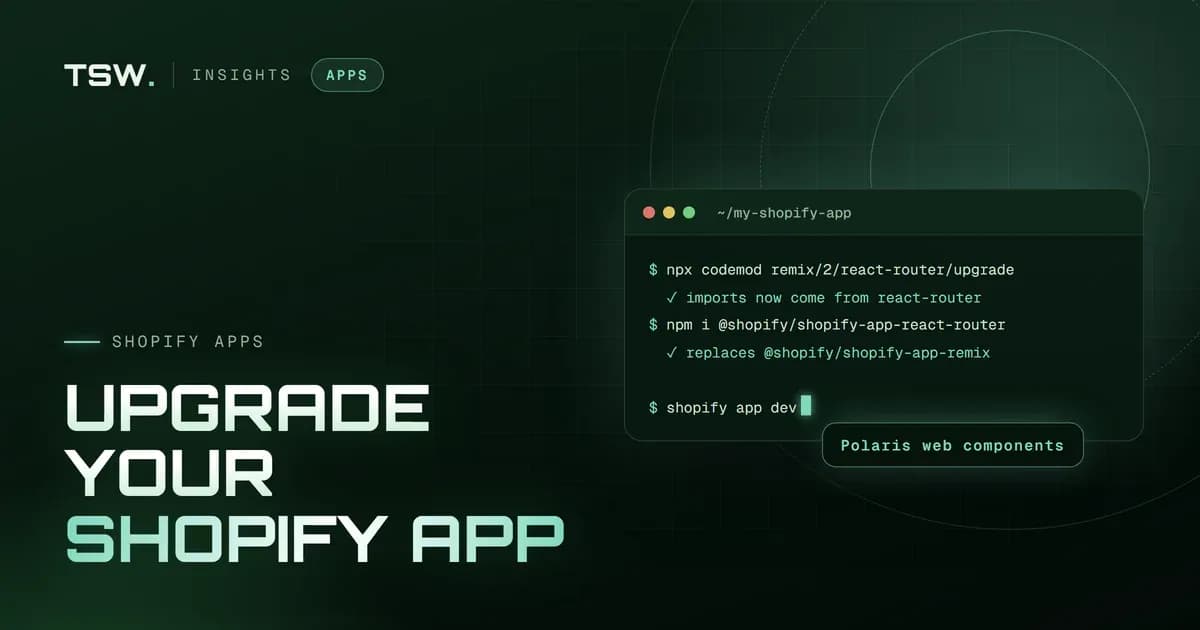
Shopify now recommends React Router for apps. The codemod handles most of it — the work is in Polaris Web Components and the APIs that quietly went away.
Hydrogen is Shopify's own framework for headless storefronts; Next.js is the most popular React framework on the web. Both build excellent headless Shopify stores. Here is how they compare on features, hosting, flexibility and long-term cost.
Start a project
Tell us where you are — a new build, a migration or a project that has stopped moving. You get a fixed scope and a plan in writing, not a sales call.